
What is MCS Certification? Everything You Need to Know for Retrofit Projects

What is MCS Certification? Everything You Need to Know for Retrofit Projects
Many Retrofit Projects Fail Before the Work Even Begins
A retrofit project can look perfect on paper. The plans are complete. The funding is approved. The installer is ready to start.
Then everything slows down.
Questions appear about standards. Documents need checking. The chosen products may not qualify. The installation company may not hold the right certification. Suddenly, a project that should have moved forward is stuck.
This happens more often than many businesses expect.
For organisations working in Retrofit, understanding MCS Certification is no longer optional. It has become one of the key building blocks for delivering renewable energy measures that meet industry standards, satisfy funding requirements, and give customers confidence.
Many people hear the term MCS but never fully understand what it means or why it matters. Others assume it only applies to solar panels. That isn’t true.
In this guide, we’ll explain exactly what MCS Certification is, why it matters, how it fits into retrofit projects, and where the support of a PAS consultant can make the process much smoother.
What is MCS Certification?
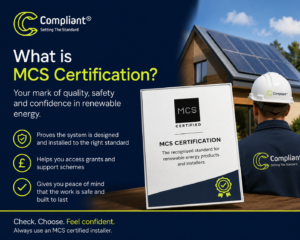
MCS Certification, also known as the Microgeneration Certification Scheme, is a recognised quality assurance standard for renewable energy products and installers across the UK.
It helps make sure renewable energy systems are installed correctly, safely, and to a consistent standard.
Rather than simply checking the finished installation, MCS looks at the entire process. This includes the products being installed, the skills of the installer, and the way work is carried out from start to finish.
When a company is MCS certified, it shows they have been independently assessed and have met strict requirements.
This gives customers confidence that the installation has been completed properly and follows recognised industry standards.
Why Does MCS Matter in Retrofit?
Retrofit is about improving existing buildings.
The aim is to make homes warmer, healthier, and more energy efficient without causing new problems.
Many retrofit projects include renewable energy measures such as:
- Solar photovoltaic (PV) systems
- Air source heat pumps
- Ground source heat pumps
- Battery storage
- Solar thermal systems
For many of these technologies, MCS Certification is expected or required.
Without it, projects can face delays, funding problems, or reduced customer confidence.
In simple terms, MCS helps ensure renewable technologies perform as they should once installed.
Why Was MCS Created?
Renewable energy has grown quickly over the last two decades.
With more companies entering the market, there needed to be a way of protecting customers from poor workmanship and unreliable products.
The Microgeneration Certification Scheme was introduced to create one recognised standard across the industry.
Its main goals are simple:
- Improve installation quality.
- Protect consumers.
- Increase confidence in renewable technologies.
- Encourage consistent working practices.
- Support the UK’s move towards lower carbon emissions.
These goals remain just as important today.
Which Technologies Are Covered by MCS?
Many people believe MCS only applies to solar panels.
In reality, it covers a wide range of renewable energy technologies.
These include:
- Solar PV
- Air source heat pumps
- Ground source heat pumps
- Solar thermal
- Battery storage
- Biomass heating
- Small wind turbines
Each technology has its own technical standards and installation requirements.
Certified installers must demonstrate that they understand these requirements before receiving approval.
How Does MCS Fit into PAS and Retrofit?
This is where many organisations become confused.
MCS and PAS are not the same thing.
However, they often work together.
A Retrofit project may follow PAS 2035 for assessment, design, coordination and quality management.
If that same project includes renewable technologies like heat pumps or solar panels, those installations will often need to meet MCS Certification requirements.
Think of it like building a puzzle.
PAS provides the framework for delivering quality retrofit projects.
MCS provides quality assurance for renewable energy installations within that project.
Both play important roles.
Why Customers Look for MCS Certification
Customers are becoming more informed.
They want reassurance before investing in renewable energy.
When they see MCS Certification, they know the installer has met recognised industry standards.
That reassurance matters.
Customers often associate MCS with:
- Better quality
- Safer installations
- Reliable workmanship
- Professional standards
- Greater trust
For businesses, this confidence can become a competitive advantage.
Is MCS Certification Required?
The answer depends on the project.
Some privately funded work may not legally require MCS Certification.
However, many government-backed schemes and funding programmes expect installations to be completed by MCS-certified installers.
Without certification, businesses may not be eligible to deliver certain projects.
This is why many organisations choose to become certified even when it is not legally required.
It opens more opportunities.
What Does the MCS Certification Process Involve?
Certification is much more than filling in an application form.
Organisations are assessed on several areas.
These include:
Business Procedures
Companies need documented processes showing how work is managed.
This includes quality checks, customer communication and record keeping.
Technical Competence
Installers must demonstrate they have the necessary skills and knowledge.
Training records and qualifications are reviewed during assessment.
Product Standards
Only approved products that meet recognised standards can be used.
This helps ensure systems perform as expected.
Installation Quality
Assessors review completed work to confirm installations meet MCS requirements.
Common Challenges Businesses Face
Many organisations underestimate how much preparation is needed.
Some common issues include:
Missing documentation.
Poor record keeping.
Unclear installation procedures.
Inconsistent quality management.
Limited staff knowledge.
Each of these problems can delay certification.
They can also affect future audits.
Preparation makes a significant difference.
The Link Between MCS and PAS 2035
PAS 2035 focuses on improving whole-house performance.
It encourages careful planning rather than simply replacing individual products.
For example, installing a heat pump without improving insulation first may reduce its effectiveness.
PAS 2035 helps prevent these problems.
If renewable technologies are then installed, MCS Certification helps ensure those systems are fitted correctly.
Together, they support better retrofit outcomes.
Why Documentation Matters
Documentation may not be exciting.
Yet it is one of the biggest reasons organisations struggle during assessments.
Assessors expect clear evidence that work follows recognised procedures.
This includes:
- Customer records
- Installation records
- Risk assessments
- Quality inspections
- Product information
- Commissioning documents
Keeping accurate records protects both the installer and the customer.
It also makes future audits much easier.
How MCS Supports Better Quality
Quality is about consistency.
Anyone can complete one good installation.
The challenge is delivering the same high standard every time.
MCS helps businesses create repeatable processes.
This reduces mistakes.
It improves customer satisfaction.
It also encourages continuous improvement.
The Benefits of a PAS Consultant’s Support
Working towards MCS Certification alongside PAS requirements can feel overwhelming.
Many organisations are trying to balance daily work while learning new standards and preparing for audits.
This is where the support of an experienced PAS consultant can provide real value.
Rather than guessing what assessors expect, businesses receive practical guidance based on industry experience.
A PAS consultant can help identify gaps before they become problems.
They can review existing procedures, explain how MCS and PAS requirements work together, and help businesses build processes that are both practical and compliant.
This saves time.
It reduces unnecessary stress.
It also gives teams greater confidence throughout the certification journey.
Instead of reacting to issues during an assessment, businesses can prepare properly from the beginning.
That often leads to smoother audits and stronger long-term systems.
Avoiding Common Mistakes
Many delays happen because organisations make avoidable errors.
Some of the most common include:
Trying to rush the process.
Using incomplete paperwork.
Failing to train staff properly.
Not reviewing internal procedures.
Assuming previous experience alone is enough.
Planning ahead reduces these risks considerably.
What Happens After Certification?
Receiving MCS Certification is not the end of the journey.
Businesses must continue meeting the required standards.
This includes:
- Maintaining quality systems.
- Keeping staff training up to date.
- Recording installations correctly.
- Completing internal reviews.
- Preparing for ongoing surveillance assessments.
Certification should be viewed as an ongoing commitment to quality rather than a one-off achievement.
How MCS Benefits the Retrofit Industry
The retrofit sector depends on trust.
Customers need confidence that improvements will deliver the promised results.
Businesses need clear standards.
Funding providers need reassurance that public money supports quality work.
MCS helps create that confidence.
It encourages consistent installation standards.
It supports better customer outcomes.
It helps renewable technologies perform as intended.
Most importantly, it strengthens trust across the entire retrofit industry.
Final Thoughts
As the demand for Retrofit projects continues to grow, understanding MCS Certification has become increasingly important.
It is far more than a certificate on the wall.
It is a recognised mark of quality that helps businesses demonstrate competence, improve customer confidence, and deliver renewable energy installations to consistent industry standards.
When combined with the structured approach of PAS 2035, MCS creates a stronger foundation for successful retrofit projects that deliver lasting results.
For organisations new to the process, the journey can seem complex. However, with careful planning, clear documentation, and the benefits of a PAS consultant’s support, achieving compliance becomes far more manageable.
Taking the time to understand both MCS and PAS today can help avoid delays, reduce costly mistakes, and improve project outcomes well into the future.


