The Five Most Common PAS 2030 Mistakes That Can Delay Your Certification


The Five Most Common PAS 2030 Mistakes That Can Delay Your Certification
Every Delay Costs Time, Money and Opportunities
You’ve invested in your business. You’ve trained your team. You’ve built relationships with customers and you’re ready to become PAS 2030 certified.
Then the assessment doesn’t go as planned.
Missing evidence. Incomplete records. Procedures that don’t quite match what happens on site.
None of these issues usually come from a lack of effort. They happen because many businesses underestimate just how much preparation PAS 2030 requires.
The frustrating part is that most delays are completely avoidable.
Understanding the most common mistakes before your assessment can save valuable time, reduce stress and help your certification journey run much more smoothly.
Mistake 1. Waiting Until the Last Minute
Many businesses begin preparing only a few weeks before their assessment.
That rarely leaves enough time to review procedures, train staff or identify gaps.
PAS 2030 is about showing that your business works consistently every day, not just during an assessment.
The earlier you prepare, the more confident you’ll feel.
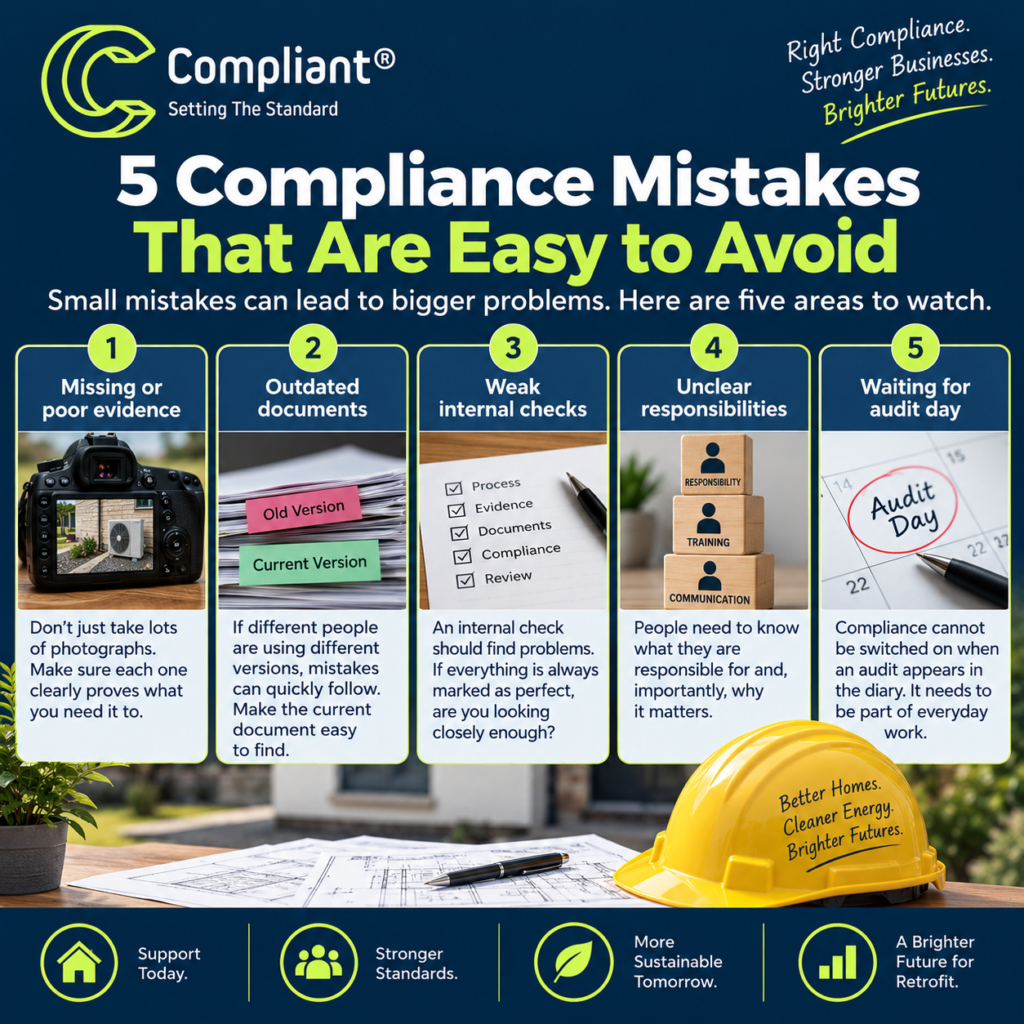
Mistake 2. Poor Site Evidence
One of the most common issues is incomplete site evidence.
Photos may be missing.
Important installation stages might not be recorded.
Documents may not match the work completed.
Good evidence tells the full story of every project.
Creating a clear process for collecting photographs and records from the start helps prevent problems later.
Mistake 3. Documentation That Doesn’t Reflect Reality
Your written procedures should describe what your team actually does.
If your documents say one thing but your installers follow a different process, this creates unnecessary risk during assessment.
Review procedures regularly and involve the people who use them every day.
Mistake 4. Staff Don’t Understand the Process
Even the best systems rely on people following them.
If team members don’t understand why certain records are needed, important information can easily be missed.
Regular training and simple guidance help everyone work consistently.
Mistake 5. Trying to Do Everything Alone
Preparing for PAS 2030 can feel overwhelming.
Many businesses spend hours trying to interpret requirements when experienced support could quickly point them in the right direction.
Working with a PAS consultant doesn’t remove your responsibility. It helps you understand what is expected and gives you confidence that your systems are moving in the right direction.
Good Preparation Builds Better Businesses
PAS 2030 is more than a certification requirement.
It encourages businesses to develop clear processes, improve consistency and deliver higher-quality retrofit work.
Those improvements benefit your team, your customers and the reputation of your business long after certification has been achieved.
Conclusion
Most PAS 2030 delays are not caused by major failures.
They are usually the result of small issues that build up over time.
By preparing early, collecting good evidence, keeping your documentation accurate, involving your team and seeking support when needed, you can make the certification process far smoother.
Strong preparation leads to stronger businesses and better retrofit outcomes.
Continue Learning
If you’re preparing for PAS 2030, take some time to review your current processes before your assessment. Identifying small improvements today can make a significant difference when the time comes to demonstrate your compliance.