PAS 2030: Why Process Matters Just As Much As Installation Quality


PAS 2030: Why Process Matters Just As Much As Installation Quality
Every installer wants to be known for doing great work. A neat finish. A happy customer. A job completed to a high standard.
But what if that still is not enough?
Many businesses spend years building a strong reputation for quality installations. They invest in training, buy the right equipment and employ skilled people. Yet when it comes to PAS 2030, some still struggle to achieve or keep certification.
Why?
Because PAS 2030 is not just about what happens on site. It is also about everything that happens before, during and after the installation.
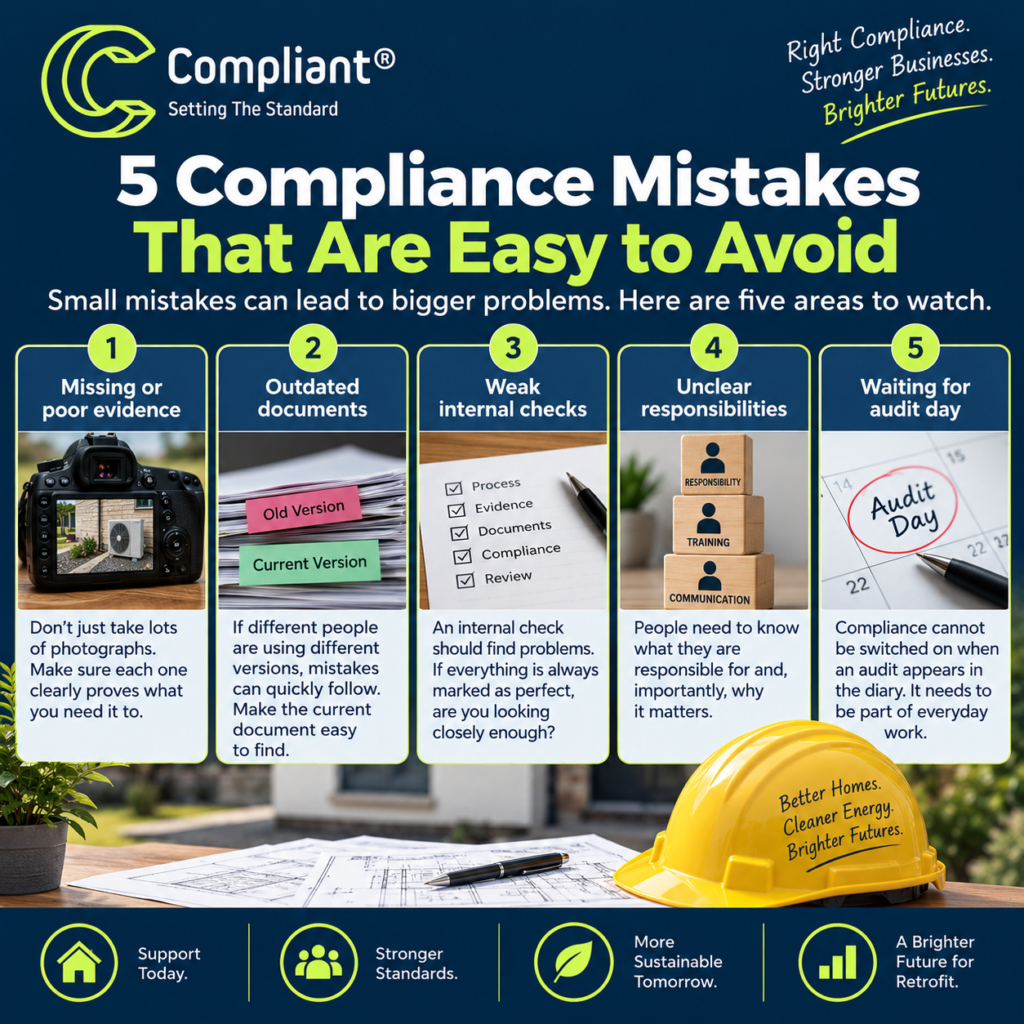
A missing record. An incomplete checklist. Poor communication. A process that changes from one job to the next. These may seem like small issues, but they can quickly become much bigger problems.
Customers may never notice these things. Auditors will.
That is why having strong processes is just as important as delivering quality workmanship. One supports the other. Without both, it becomes much harder to prove that your business consistently meets the requirements of PAS 2030.
Many businesses learn this lesson the hard way. They only discover gaps when an audit is close or when something goes wrong. By then, fixing the problem often takes far more time, money and effort than preventing it in the first place.
The good news is that it does not have to be that way.
With the right systems and the right support, your processes can become one of your greatest strengths.
What Is PAS 2030 Really Looking For?
It is easy to think that PAS 2030 is simply a standard for installers.
That is only part of the story.
Yes, installation quality matters. It always will. But PAS 2030 also wants businesses to show that they work in a planned, organised and repeatable way.
Imagine two companies fitting the same insulation.
Both produce an excellent finished job.
One business has clear records, trained staff, standard documents and evidence for every stage of the project.
The other relies on memory, handwritten notes and different ways of working depending on who is carrying out the work.
From the outside, both installations may look identical.
From an audit point of view, they are very different.
PAS 2030 is designed to reduce risk. It helps make sure every customer receives the same high level of service, regardless of who completes the work or when it takes place.
That consistency only comes from having strong processes.
Processes help businesses answer important questions.
How are jobs planned?
Who checks the work?
How is information recorded?
What happens if something goes wrong?
How do lessons learned improve future projects?
Without clear answers, it becomes difficult to demonstrate compliance.
Good Installations Start Long Before Work Begins
Many people think installation starts when tools come out of the van.
In reality, it starts much earlier.
The first customer enquiry.
The initial discussions.
The information collected.
The planning.
Every one of these steps has an impact on the final result.
When these early stages are rushed or missed, problems often appear later.
Incorrect information may lead to delays.
Missing documents may stop work from progressing.
Poor communication can create confusion for customers and installers alike.
Strong businesses understand that preparation is part of quality.
They know that spending time planning often saves much more time later.
This is one reason why successful PAS 2030 businesses rely on repeatable processes.
Everyone follows the same steps.
Nothing important is forgotten.
Customers receive a consistent experience.
The team knows exactly what is expected.
Instead of relying on memory, they rely on systems.
That creates confidence across the whole business.
Consistency Builds Trust
Customers rarely see your internal processes.
They see the end result.
But those hidden processes influence everything they experience.
Did someone answer their questions quickly?
Did appointments happen when promised?
Was paperwork completed correctly?
Were expectations clear from the beginning?
Did the installation happen smoothly?
Did they receive all the information they needed afterwards?
None of these things happen by chance.
They happen because someone created a process that people follow every day.
Consistency creates trust.
Customers notice when every stage feels organised.
Certification bodies notice too.
Strong processes show that quality is built into the business, not left to individual people.
That makes a huge difference.
Why Businesses Run Into Problems
Most businesses do not set out to have poor processes.
They simply grow.
More customers arrive.
More staff join.
More work needs completing.
What once worked for a small team no longer works for a larger one.
Suddenly different people complete paperwork in different ways.
Evidence is stored in several locations.
Documents become outdated.
Training varies between employees.
One manager asks for one thing.
Another asks for something different.
Before long, nobody is completely sure which process is correct.
These issues often remain hidden until an audit approaches.
That is when businesses realise just how much information they need to gather.
Stress levels rise.
Teams rush to complete missing records.
Old documents need updating.
People spend valuable time searching for information that should already have been available.
None of this improves installation quality.
It simply highlights weaknesses in the way the business operates.
Small Process Problems Soon Become Bigger Ones
A missing photograph might seem like a small issue.
An unsigned document may not feel important.
A forgotten checklist could appear harmless.
On their own, these things may seem insignificant.
Together, they tell a different story.
They suggest that processes are not always being followed.
If one record is missing, an auditor may naturally ask whether other parts of the process have also been missed.
That is why consistency matters.
Strong processes reduce the chance of these small mistakes happening in the first place.
They also make it much easier to find information when it is needed.
Instead of searching through emails, folders and phones, everything already has its place.
That saves time.
It reduces stress.
Most importantly, it gives confidence that the business is operating in a controlled way.
Good Processes Support Good People
Some business owners worry that introducing more processes will make work slower.
In reality, the opposite is often true.
Clear processes remove uncertainty.
Staff know exactly what to do.
They know which forms to complete.
They know where information should be stored.
They know who is responsible for each task.
This allows skilled installers to focus on what they do best.
Instead of constantly asking questions or correcting mistakes, they can spend more time delivering quality work.
Good systems do not replace skilled people.
They help skilled people perform at their best.
That benefits everyone.
The customer receives a better experience.
Managers spend less time solving problems.
Audits become far less stressful.
The business becomes more confident.
Process Protects Your Reputation
Reputation takes years to build.
It can be damaged much more quickly.
One unhappy customer may share their experience with friends.
They may leave an online review.
Others may begin to question the quality of your business.
Sometimes the installation itself is not the problem.
The problem was poor communication.
Or missing paperwork.
Or delays caused by unclear planning.
Customers often judge the whole experience, not just the finished work.
Strong processes reduce these risks.
They help make sure customers receive the same professional service every time.
That consistency strengthens your reputation and helps build long-term trust.
The Benefits of a PAS Consultant’s Support
Many businesses assume they need to work everything out on their own.
That can be a costly mistake.
A PAS consultant has seen how different businesses operate.
They understand the common problems.
More importantly, they know how to prevent them before they affect certification.
Rather than simply helping prepare for an audit, a good consultant helps improve the way your business works every day.
They can review your current processes and identify areas that could cause problems later.
Sometimes these are obvious.
Sometimes they are hidden within everyday routines that nobody has questioned for years.
An experienced consultant brings fresh eyes.
They are not emotionally attached to existing ways of working.
Their focus is simple.
Help you create processes that are clear, practical and easy for your whole team to follow.
That support often saves businesses a significant amount of time.
Instead of guessing what is required, you receive guidance based on experience.
Instead of fixing problems after they appear, you reduce the chance of them happening in the first place.
For many businesses, that confidence is one of the biggest benefits of a PAS consultant’s support.