Compliance Shouldn’t Depend on Your Best Installer Being on Site

 Compliance Shouldn’t Depend on Your Best Installer Being on Site
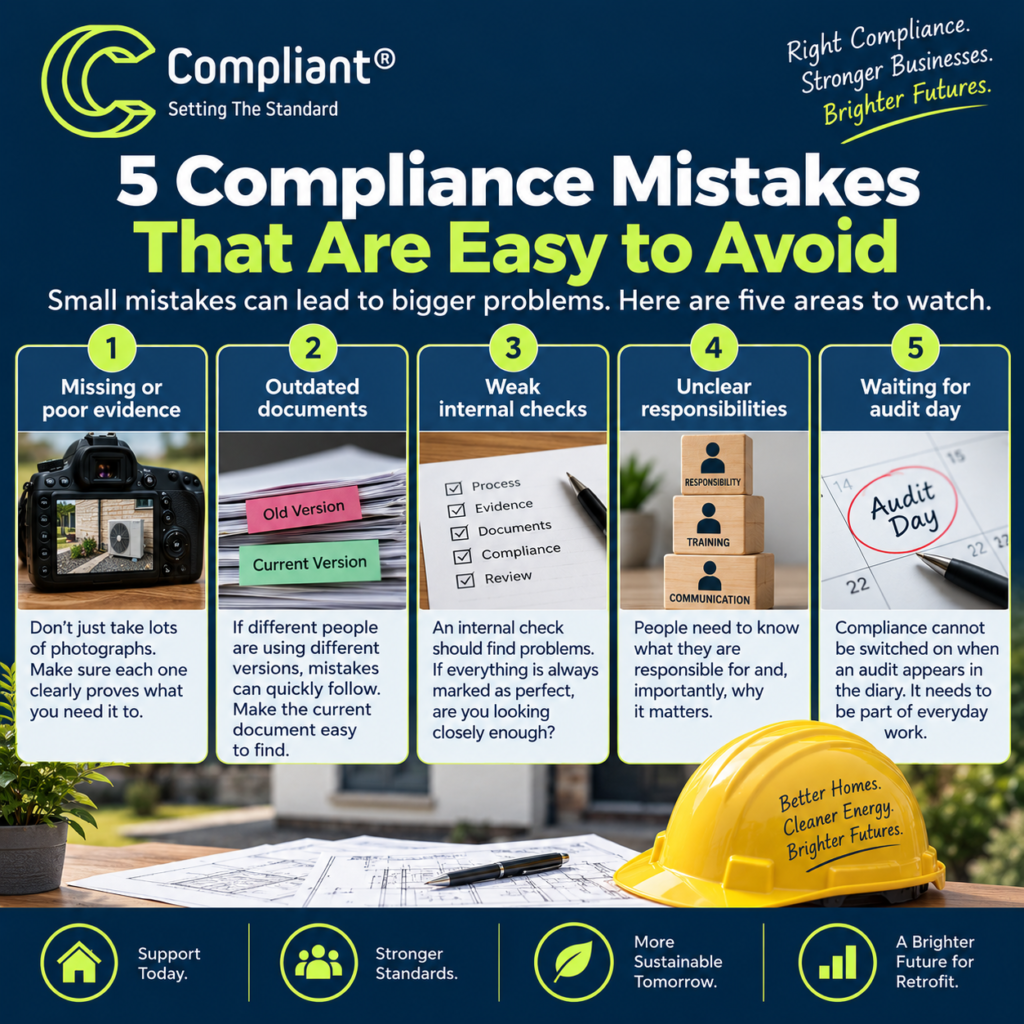
Your best installer takes a week off. By Tuesday, the office is chasing missing photos. Another team has used an old form. A job is ready to close, but nobody can explain whether a key check happened.
Soon, someone suggests calling the person on holiday.
The pressure builds quickly.
You may have skilled people and a full order book. Yet if work starts to fall apart when one person is away, your business has a gap that needs attention.
That gap can lead to repeat visits, delayed job files and difficult talks with customers. It also puts pressure on the person who keeps fixing things.
Strong PAS 2030 compliance needs clear ways of working that the right people can follow across your business.
Your best installer has a huge part to play. Their knowledge can help raise the whole team’s standard. However, each job still needs people with the skills, training and supervision required for that work.
The aim is to build proper cover and shared knowledge, so good work continues when someone is ill, on leave or working elsewhere.
When one person becomes the answer to everything
In many installation businesses, there is someone everyone trusts.
They spot missing details, know which photos matter and remember what caused trouble on the last job. When the office has a question, their phone rings.
Over time, more work lands with them. They check other people’s records, answer customer queries and help prepare for assessments.
Their effort keeps jobs moving. It can also hide problems.
A form may be unclear, but they know how to complete it. Instructions may be hard to find, but they have saved a copy. Other staff may never learn how an issue was solved because this person quietly dealt with it.
Managers can mistake that effort for a process that works.
The weakness becomes clear during leave, sickness or growth. Suddenly, the business needs answers that live in one person’s head.
This is a management issue worth facing early. Ask where your team needs clear instructions, better training or more time. Your strongest installer can help answer those questions, but managers need to act on what they learn.
PAS 2030 reaches beyond the person holding the tools
PAS 2030 covers the installation of energy efficiency measures in existing homes. Its requirements include how installation work is managed, the suitability of materials and tools, and the skills of those doing the work.
That gives owners, managers and office staff a clear reason to stay involved. The way a business plans and supports work matters alongside what happens on site.
TrustMark’s certification checklist also calls for a quality management system. Put simply, this is the set of processes your business uses to deliver work consistently. It can be held on paper or electronically.
Think about the journey of one job. Someone books it, prepares the information, assigns the team, carries out checks and gathers the records.
Each step affects the next person.
If office staff send the wrong information, installers face avoidable questions. If the site team misses records, the office faces a chase. Clear links between these roles help everyone do their job.
Make responsibilities clear before work starts
A common source of trouble is the belief that someone else has dealt with a task.
The installer thinks the office checked a document. The office thinks the supervisor reviewed the photos. The supervisor assumes the job cannot be closed until everything is complete.
Meanwhile, the file moves forward with a gap.
For each stage, agree who does the task, who checks it and who provides cover. Include the people who book work and review records, as well as those on site.
Keep this practical. A short written guide may be enough to explain daily responsibilities, supported by the full instructions for the work.
Ask staff to walk through a recent job together. Where did they wait for an answer? Which details were missing? Who had to step in?
Those conversations often reveal tasks that have never had a clear owner.
Make sure people also understand the limits of their role. An office check can confirm that a document is present. Technical approval needs someone with the right authority and skills.
Build cover with the right skills
Having another person available does not automatically give you suitable cover.
PAS 2030 includes requirements for checking people’s competence, assigning work and providing supervision. Competence means having the knowledge and skills needed for the task. The detailed requirements depend on the type of installation.
Check these requirements when planning teams. A capable installer in one area may need different qualifications or training for another.
Keep an up to date record of who can do each task, who needs supervision and where further training is needed. Use that record when booking work and approving leave.
If your best installer is the only person who meets a requirement for a planned task, arrange suitable cover or change the programme. A checklist cannot fill that skills gap.
Sharing knowledge still matters. Give experienced staff time to explain their methods, discuss common problems and support learning.
Follow that with the training, assessment and supervised experience needed for the role. Ask people to show what they can do, rather than assuming they understood because they attended a talk.
Give every team clear job information
Good teams lose time when they have to hunt for basic information.
A design is buried in an email. The latest instructions sit on a manager’s computer. A change was discussed by phone but never added to the job file.
Your most experienced installer may know where to look. Someone covering their work may struggle.
Review the information a team receives before arriving at a property. Make it easy to find the current design, relevant instructions, known issues, customer arrangements and contact details for questions.
Use clear file names and remove old versions from everyday use. Tell people when an update changes what they need to do.
A shared folder or job system can help, provided staff know how to use it and can access what they need.
Try a simple check: ask someone providing suitable cover to find the information for tomorrow’s job. Watch where they get stuck.
Their questions can show you what needs improving before those gaps reach site.
Capture evidence while the work is visible
Missing evidence often becomes urgent at the worst time.
The team has left. Another job has started. The work you wanted to see is now covered.
Someone asks your best installer whether a similar photo from another property would help. It would not show what happened on this job.
Agree what evidence is needed for each installation, including any requirements from the scheme, contract and certification body. Build that into the job instructions.
For photos, make the pre, mid and post stages clear where they apply. Explain which details need to be visible and when images should be taken.
Show teams examples of useful photos. Discuss why a dark, distant or blurred image may fail to show the required detail.
Give each file a clear link to the correct property and work stage. Arrange checks while there is still time to deal with gaps.
If evidence is missing, record the problem honestly and get suitable advice on how to assess it. Never mark a check as complete when nobody can confirm it happened.
Help people raise problems early
Your best installer probably knows when something needs a closer look.
A newer team member may worry that stopping to ask will make them seem slow. A busy supervisor may feel pressure to keep the job moving.
Managers influence what happens next.
Make it clear that staff should raise concerns promptly. Give them a named contact and a backup. Explain how to record the issue and what work needs to pause while it is reviewed.
PAS 2030 requires proposed changes to the design or site specific installation method to be documented and submitted to the Retrofit Coordinator for approval before the affected work proceeds. That is the person responsible for coordinating the project.
An informal call to a trusted colleague does not replace that approval.
Check how your team would respond to a material change, unexpected damp or a detail that differs from the design.
If their answers vary, use that discussion to improve the instructions. Make sure they know who can agree the next step and how that decision reaches everyone involved.
Make job records easy to pick up
Imagine a supervisor is ill halfway through a job.
Could someone with the right skills review the file and see what has happened? Would they know what remains open and what needs checking next?
A clear record helps them make informed decisions.
Agree a common layout for job files. Separate current instructions, completed records, photos, approvals and outstanding actions so staff can find them quickly.
Give open issues an owner and a date for review. Record important decisions as the job moves forward.
This helps the office too. Staff can answer progress questions without calling an installer who is working in another customer’s home.
Keep records within the business systems used for the job, with access for the people who need them. Avoid leaving the only useful copy on one person’s phone.
Ask staff who provide cover to try using the file. Their feedback can help you spot confusing labels, missing information and tasks that need a clearer handover.
Include subcontractors in your planning
Bringing in another team can help when demand grows. It also creates more people who need clear information about your jobs.
Before assigning work, check the team’s relevant skills and agree how supervision, records and questions will be handled. Make sure your arrangements fit the work and the requirements that apply.
Give subcontractors the current job information and explain how your business expects evidence to be returned. Walk through the process with them.
A brief email saying “send the usual photos” leaves room for different views of what usual means.
Agree how you will review their first jobs and who will deal with missing information. Check progress while work is still under way, so there is time to raise questions.
Price and availability matter when choosing support. Build the cost of proper checks and communication into your plans too.
Ask your own staff where handovers become difficult. Perhaps records arrive in several formats or questions go to someone who is rarely available.
Use that feedback to agree a clearer approach with the subcontractor. Review these arrangements whenever you appoint another team. A reliable working relationship gives both teams a better chance of completing the job without a last minute chase for answers.
Check whether the process works across teams
A neat folder of procedures tells you little about how well people use them.
Look at completed work from different teams. Include jobs handled while key staff were away.
Can you follow what happened? Are there repeated gaps? Did questions get answered at the right time?
Keep these reviews focused. You might compare a few recent files, visit work in progress or ask staff to explain how they deal with a common issue.
When you find a problem, look beyond the missing item.
A missed photo could point to unclear instructions, poor access to the job system or pressure to finish too quickly. Telling people to be more careful may leave the cause untouched.
Choose an action, give someone responsibility and check whether it helped.
Track a few useful measures, such as repeat visits, incomplete files and time spent chasing records. Over time, these can help you see where your process needs attention and whether changes are making work easier.
The benefits of a PAS consultant’s support
It can be hard to see familiar problems clearly when you are busy running the business.
You may know that staff rely on one person without knowing where to start. A PAS consultant can help you examine that pattern and agree practical changes.
The benefits of a PAS consultant’s support can include:
- Reviewing how work moves from booking through to the completed job file.
- Spotting unclear responsibilities and gaps in cover.
- Helping you check training records and identify where specialist advice or further learning is needed.
- Making forms and instructions easier for staff to use.
- Reviewing sample files and helping you investigate repeated problems.
The value comes from applying the advice to your business.
A small team may need simpler records and clearer cover arrangements. A growing business may need stronger checks between the office, supervisors and several installation teams.
Ask how the consultant will involve your staff. People are more likely to use a process they understand and have had a chance to test.
Support should also help your business retain its knowledge. Staff need to know how to follow the process and keep it current after the review ends.
A consultant can help you prepare and improve your working methods. Your business remains responsible for its work, and certification decisions sit with the certification body.
Start with a practical review this week
You do not need to rewrite every document at once.
Begin with the places where one person’s absence causes the most trouble.
Ask your best installer which questions they answer most often. Speak to office staff about the records they chase. Listen to team members who find some parts of the job unclear.
Then choose one recent installation and follow its records from start to finish. Check whether someone providing suitable cover could understand it without a string of phone calls.
Use what you find to set a short action plan. Give each action an owner, a deadline and a way to check the result.
You could begin by:
- Naming cover for a key role.
- Clarifying one confusing instruction.
- Checking the skills needed for upcoming jobs.
- Improving how teams record open questions.
- Reviewing whether the next few job files are easier to complete.
Protect time for this work. Asking busy staff to improve the process in spare moments often means the changes never get finished.
Share progress with the team and invite feedback. A small change that removes daily confusion can be a useful first step towards wider improvement.
Build consistency into your PAS 2030 compliance
Your best installer should be able to take leave without spending it answering routine questions.
Other team members should have clear instructions, suitable support and a safe route for raising concerns. Managers need enough information to plan work around the skills available.
That takes attention across the business.
Choose one question to ask this week: where would work become difficult if a key person were away tomorrow?
Use the answer to review your cover, records and training plans. Start with the gap that creates the greatest risk or disruption.
Compliant can help you review your PAS 2030 processes and identify practical ways to support consistent work across your teams.
Speak to Compliant about your certification plans.